
The short answer
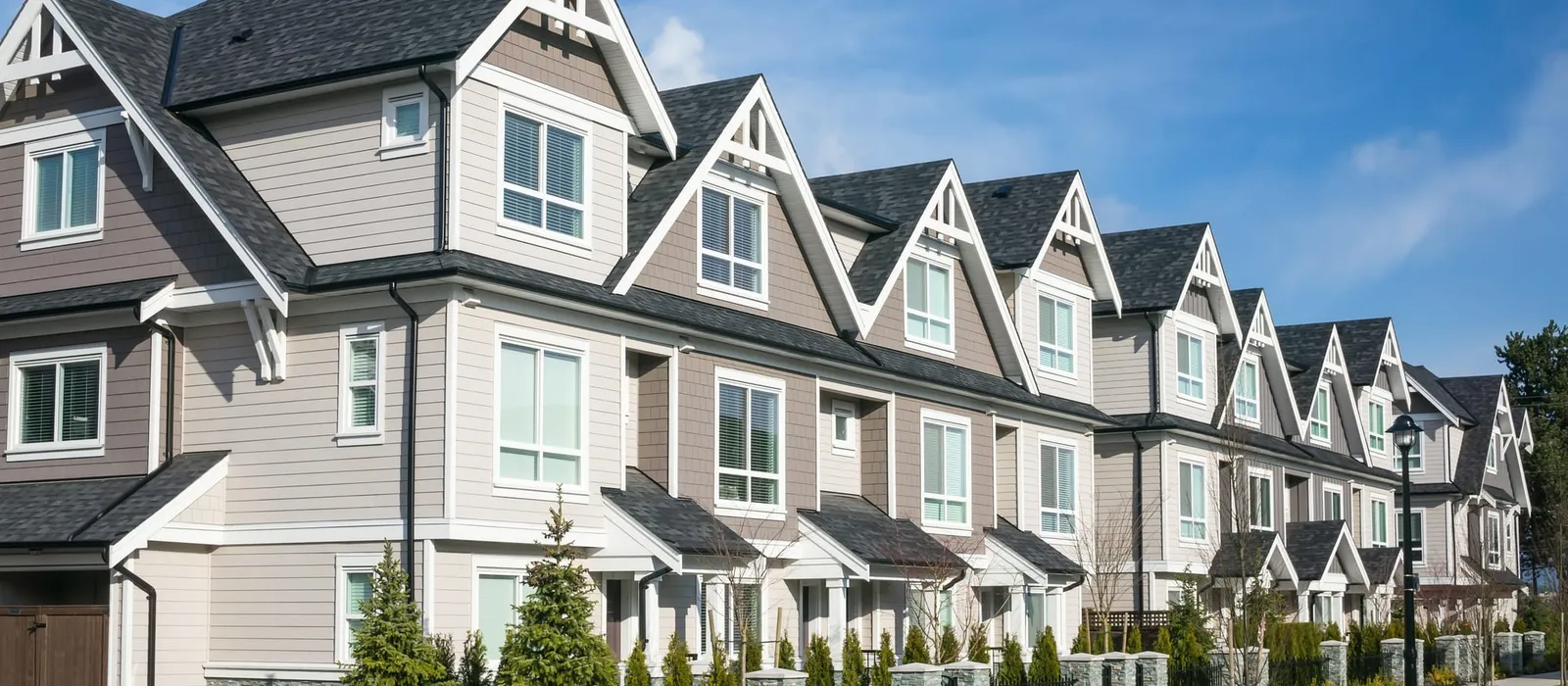
A townhouse you rent out is investment real property, so it can be sold into a 1031 exchange and replaced with any other U.S. real property held for investment. What changes from a detached house is the legal form and the association: many townhouses are fee simple lots in a planned unit development, others are condominium units, and that difference decides how a buyer's lender reviews the project. The association's rental rules decide how many buyers are investors. The depreciation you took over 27.5 years is deferred in a complete exchange and taxed at up to 25% if you sell for cash.
At a glance
| Like-kind status | Fee simple townhouse and condominium unit are both real property for section 1031 |
|---|---|
| Depreciation | 27.5-year residential rental property; the land share is never depreciated |
| Recapture on a cash sale | Unrecaptured section 1250 gain taxed at up to 25% |
| Fannie Mae PUD units | Project review waived for units in a PUD project, with limited exceptions |
| Fannie Mae PUD test | Automatic HOA membership, mandatory assessments, common property, not legally a condo |
| California rental floor | An association cannot cap rentals below 25% of units; it may ban rentals of 30 days or less |
| Florida HOA rental amendments | Post-July 1, 2021 rental limits bind only later buyers or consenting owners, with exceptions |
A townhouse is like-kind to any real estate; its legal form decides how a buyer finances it
Reg. section 1.1031(a)-3 lists fee ownership and houses among real property, so a rented townhouse exchanges for a single-family rental, a fourplex, a net-leased store or a DST interest on the same terms. The tax result does not depend on whether you own the land under the unit or an airspace condominium unit.
The buyer's loan does. Fannie Mae's Selling Guide B4-2.3-01 defines a PUD as a project in which HOA membership is automatic and nonseverable, assessments are mandatory, the association owns common property, and the unit is not legally part of a condo or co-op; zoning alone does not make a project a PUD. Under B4-2.1-01, lenders do not need a full project review for units in a PUD, apart from certain manufactured-home projects, while most condo units are reviewed.
Your deed, plat and declaration show which you own. A fee simple townhouse in a PUD usually reaches more financed owner-occupant buyers because the project review that can stall a condo sale does not apply. If your unit is legally a condominium, the association reserve and lender review issues on our condo rental page govern your timeline.
Association rental rules shape your buyer pool and your record of investment use
Investors will pay only for a unit they can lease, so a rental cap, a waiting list or a minimum lease term cuts the investor share of buyers. States set some limits. California Civil Code section 4741 bars a common interest development from prohibiting rentals or capping them below 25% of the separate interests, but lets it ban rentals of 30 days or less.
Florida Statutes section 720.306(1)(h) applies HOA rental limits adopted after July 1, 2021 only to owners who acquire title later or consent, but lets every association restrict leases shorter than 6 months and rentals more than three times a year. Your buyer may face rules you were exempt from, which affects what an investor will pay. Other states set different rules, and many leave the question to the declaration, so read yours before you price the unit.
The same leases are your evidence. Signed leases at market rent, rent deposits and Schedule E returns show the townhouse was held for investment. If you lived in it first, the conversion rules on our former home rental page apply before the exchange question.
What a cash sale would cost, and what a complete exchange defers
Publication 527 depreciates residential rental property over 27.5 years and says land cannot be depreciated, so only the building's share of your price was deducted. On a cash sale, the straight-line depreciation is unrecaptured section 1250 gain taxed at up to 25% under section 1(h), and the rest of the gain at capital-gain rates.
Hypothetical: a townhouse bought for $300,000, with $60,000 allocated to land, has taken $70,000 of depreciation and sells for $450,000 after costs. The gain is $220,000: $70,000 taxed at up to 25% and $150,000 at 15% or 20%, the 15% band ending at $613,700 of taxable income for joint filers in 2026 under Rev. Proc. 2025-32, plus 3.8% net investment income tax above $250,000 of modified AGI under section 1411. A complete exchange defers all of it; run your own numbers with your CPA.
At closing, the association's transfer and estoppel fees and the dues proration appear on the settlement statement. Rent and deposit prorations are a separate question covered on our prorations and boot answer.
Replacement options: another unit, a larger property, or out of associations entirely
Owners who sell one townhouse often want fewer, larger properties or no landlord work at all. Any of these keeps the deferral if the equity and debt are fully replaced, and each removes or changes the association layer in a different way.
- Another townhouse or a detached rental house: same work, check the new association's rental rules first.
- A duplex to fourplex: several townhouses consolidated into one property with no association.
- A traditional DST: fractional, professionally managed property with no tenants or association to deal with.
Buying a townhouse as replacement property: the governing documents and rental rules before day 45
Read the association documents before you identify, not after. Ask for the declaration and amendments, the rules, the budget and reserve figures, pending or approved special assessments, the rental policy and any waiting list or registration requirement, and confirm whether the unit is a PUD lot or a condominium. Make the contract's document-review contingency end before your 45th day so you can identify another property if the rules do not allow your plan.
Confirm that you, as the new owner, can lease on closing day. In Florida, a rental limit adopted after July 1, 2021 that the seller avoided applies to you as a later buyer, and the statute says a transfer to an affiliated entity is not a change of ownership, while a transfer from an entity to an unaffiliated buyer is. In California, any ban on rentals of 30 days or less applies regardless.
Lease the unit at fair rent soon after closing and keep the file, because it is the proof that the replacement is held for investment. Reg. section 1.1031(k)-1 lets you identify three properties of any value or more within 200% of what you sold, so naming two townhouses in different associations, or a DST as a backup, guards against one association's rules failing your plan.
Related questions
Is a townhouse like-kind to a commercial building?
Yes. All U.S. real property held for business or investment is like-kind, so a townhouse can be exchanged for commercial property, land or a DST interest.
Does it matter whether my townhouse is a condo or fee simple for the exchange?
Not for the tax result. It matters for the sale, because a lender reviews a condo project in ways it usually does not review a PUD.
Can I deduct HOA dues on the townhouse I rent out?
Publication 527 notes that a condominium can take the form of a townhouse and lets you deduct dues and assessments for maintenance of the common elements when you rent it out. Special assessments for improvements are not deductible; you may be able to recover your share through depreciation.
My HOA just capped rentals. Should I sell before it applies to me?
Check your state's rule first. In Florida, a cap adopted after July 1, 2021 generally applies only to later buyers and consenting owners, which protects you but lowers what investors will pay; in California a cap cannot go below 25% of units.
Can I move into the replacement townhouse later?
Only after it has been held for investment, since moving in soon after the exchange undercuts the intent the exchange requires. Section 121(d)(10) also denies the home-sale exclusion on a sale within 5 years of acquiring the property in an exchange.
Sources
Checked against these publications on September 30, 2026. Rules and figures change; confirm the current version with your CPA or attorney before you act. This page is general information, not tax or legal advice.
- Treas. Reg. section 1.1031(a)-3, Definition of real property
- Fannie Mae Selling Guide B4-2.3-01, Eligibility Requirements for Units in PUD Projects
- Fannie Mae Selling Guide B4-2.1-01, General Information on Project Standards
- California Civil Code section 4741, Rental restrictions in common interest developments
- Florida Statutes section 720.306, Homeowners' association meetings and amendments
- IRS Publication 527, Residential Rental Property
- IRC section 1(h), Maximum capital gains rate
- Rev. Proc. 2025-32, 2026 inflation-adjusted tax items
- IRC section 1411, Net investment income tax
- IRC section 121, Exclusion of gain from sale of principal residence
- Treas. Reg. section 1.1031(k)-1, Treatment of deferred exchanges