
The short answer
The same lump sum can be three different things on your return. A perpetual easement over the sign site, the solar field or the pipeline corridor is a sale of part of your land: the payment reduces the basis of that part, the excess is gain, and that gain can be deferred through a section 1031 exchange into other real property. A payment for a term of years, including a solar lease prepaid up front, is rent, taxed as ordinary income when received and never exchangeable. A corridor taken by a pipeline with condemnation power, or sold under the threat of it, is a forced sale under section 1033, which has its own three-year replacement window and no intermediary. Easement proceeds carry no debt, so where an exchange applies the structure that fits is an all-cash traditional DST or a whole net-leased property.
At a glance
| Perpetual easement | Publication 544: the payment reduces the basis of the part affected; anything above basis is gain on a sale |
|---|---|
| Term-of-years payment | Reg. section 1.61-8: advance rentals are income in the year received whatever period they cover |
| Construction damages | Publication 225: a temporary construction easement is rent; crop damage payments are Schedule F income |
| Billboard structures | Section 1033(g)(3): an outdoor advertising display is real property only if the election is in effect |
| Pipeline condemnation power | 15 U.S.C. 717f(h): a certificate holder may take the right-of-way by eminent domain if it cannot buy it |
| Section 1033 standard | Section 1033(g): condemned business or investment real property may be replaced with like-kind property |
| Section 1033 window | Section 1033(g)(4): three years after the close of the year the gain is first realised |
Three payments, three tax results: perpetual easement, term-of-years rent, and damages
A perpetual easement is a disposition of an interest in your land. Publication 544 says the amount received for granting an easement is subtracted from the basis of the part of the property affected, and only that part's basis is reduced; where the basis of the strip cannot be separated, the whole property's basis is reduced instead. Any amount above the basis being reduced is a taxable gain reported as a sale. An easement is a listed real property interest under Reg. section 1.1031(a)-3(a)(5), so that gain can be deferred in an exchange.
A payment for a term of years is rent. Reg. section 1.61-8(b) requires advance rentals to be included in income for the year of receipt regardless of the period covered, and treats lease cancellation payments the same way. A developer that pays $200,000 today for 25 years of rights has paid you $200,000 of ordinary income this year. No exchange reaches it because nothing was sold.
Damages are a third category. Publication 225 works a pipeline example: the right-of-way payment reduces the basis of the affected land and any excess is gain, a payment for a temporary construction easement is rental income on Schedule E, and a settlement for damage to a growing crop is farm income on Schedule F. The buyer's cheque usually bundles all three, and the agreement should allocate them, because the allocation is what sets your tax and what the exchange can carry.
Billboards: the ground under the sign is real property; the sign itself is only if you elect it
A sign company buying out a billboard ground lease usually takes a perpetual or very long easement over the sign site together with an assignment of the lease. The easement is real property and the proceeds are exchangeable on the same analysis as a tower site; the cell tower lease page works the 30-year duration benchmark that applies to any term easement.
The structure is different. section 1033(g)(3) lets a taxpayer elect to treat property that constitutes an outdoor advertising display as real property, and once made the election cannot be revoked without consent. Without that election on your return, a sign you own is section 1245 equipment, and the part of a buyout attributable to the structure is a taxable sale of personal property outside the exchange. Landowners who merely lease the ground to a sign company do not face this, because the sign belongs to the tenant.
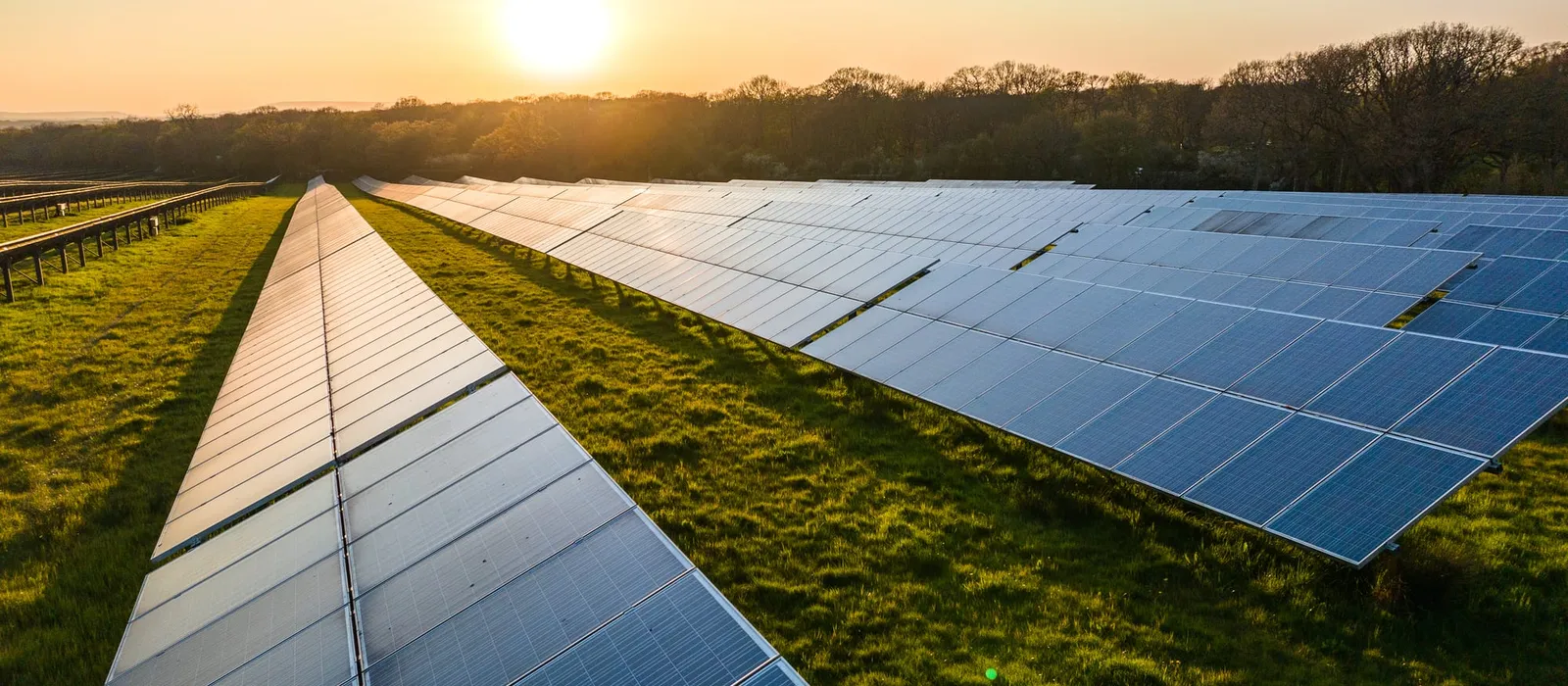
Solar: the lease is a term of years, the land stays yours, and the prepayment is rent
A utility-scale solar lease runs for a term of years with options, and the developer owns the panels, racking and inverters. Leasing the land is a use of it for business or investment, so the land remains exchangeable with the lease in place; the land with a solar or wind lease page covers selling or buying leased land in an exchange.
What cannot be exchanged is the lease income. A signing bonus and rent prepaid for the development period are income when received under the advance-rental rule, a payment for an option to lease has its own timing rule that your CPA should confirm, and a developer that offers a lump sum to buy out the remaining term is paying you rent in advance, not buying your land. The only form that converts a solar payment into a sale is a perpetual easement over the array footprint, which developers rarely offer because their project life is finite.
Pipelines: a corridor taken under condemnation power is a section 1033 conversion, not a 1031 exchange
An interstate natural gas pipeline holding a certificate of public convenience and necessity may, under 15 U.S.C. 717f(h), acquire the necessary right-of-way by the exercise of the right of eminent domain when it cannot acquire it by contract. Many intrastate pipelines and utilities hold similar power under state law. A landowner negotiating with such a buyer is selling under the threat of condemnation whether or not a suit is filed.
Publication 544 treats the grant of an easement under condemnation or the threat of it as a forced sale: you keep legal title, but gain or loss is figured as a condemnation gain or loss. That moves the transaction out of section 1031 and into section 1033. For real property held for business or investment that is condemned, subsection (g)(1) lets you replace it with property of like kind, the same standard as an exchange, and subsection (g)(4) gives three years from the close of the first year in which gain is realised instead of two.
A worked model: a $300,000 perpetual pipeline easement across 20 acres of a 160-acre farm
Take a hypothetical 160-acre farm with a basis of $800,000, or $5,000 an acre, crossed by a 50-foot corridor that affects 20 acres, using round numbers. The pipeline pays $300,000, allocated in the agreement as $250,000 for the perpetual easement, $30,000 for a two-year temporary construction easement and $20,000 for crop damage.
The $30,000 is rent on Schedule E and the $20,000 is Schedule F income; neither can be reinvested without tax. The $250,000 easement payment is applied against the $100,000 basis of the 20 affected acres, reducing it to zero, and the remaining $150,000 is gain on a forced sale. Under section 1033 the farmer has until the end of the third year after the year of the sale to spend at least $250,000 on like-kind real property, and the $150,000 of gain is deferred if the full amount is reinvested.
- Perpetual easement: $250,000 received against $100,000 of basis; $150,000 of gain, deferrable under section 1033 (or 1031 for a non-condemning buyer).
- Temporary construction easement: $30,000 of rent, taxed this year.
- Crop damage: $20,000 of Schedule F income, taxed this year.
- Section 1033 window: three years after the close of the year the gain is realised; no intermediary required.
Where an exchange applies, the replacement is usually an all-cash DST; under section 1033 the DST question is open
Easement proceeds are debt-free and the landowner usually keeps the rest of the parcel, so the replacement is an income-producing interest sized to the payment rather than a whole property. An all-cash Delaware Statutory Trust, which holds leased buildings with no mortgage and distributes rent to beneficial owners, fits that; the firm's traditional DST page lists minimums between $100,000 and $250,000 per trust.
A DST interest cannot be sold on a public market, the sponsor decides when the property is sold, distributions are not guaranteed and may be reduced, and the investor can lose part or all of the principal if a tenant defaults or the property sells below cost. A landowner who traded a corridor for a trust distribution should hold the interest expecting those outcomes to be possible.
Two cautions follow from the sections above. For a buyout from a buyer without condemnation power, the DST is an ordinary section 1031 replacement and the 45-day list applies. For a corridor taken under condemnation power, section 1033 governs and no authority was found treating a DST beneficial interest as qualifying replacement property; that question goes to tax counsel, and a whole property or a direct title security held through a single-member LLC may be the safer identification until it is answered.
Related questions
The solar developer wants to buy out the rest of a 30-year lease. Can I exchange that?
No. A payment for the remaining term is rent in advance under the regulations and is ordinary income in the year received. Only the sale of the land itself, or of a perpetual easement, produces proceeds an exchange can carry.
Does a pipeline easement count as a sale for 1031 or 1033?
If the pipeline holds condemnation power and you sell under that threat, it is a forced sale under section 1033, with a three-year window and no intermediary. If the buyer has no such power, it is an ordinary section 1031 transaction with the 45-day and 180-day rules.
Do I have to reinvest the damages too?
No, and you cannot. Construction-period rent and crop damage payments are income when received, not sale proceeds. Only the easement payment is a disposition that either section can defer.
I own the billboard structure. Is it part of the exchange?
Only if a section 1033(g)(3) election treating the display as real property is in effect on your return. Without it the structure is depreciable equipment and its share of the price is a taxable sale of personal property.
Can I use a DST as section 1033 replacement property?
No authority was found either way. Section 1033(g) applies the like-kind standard to condemned real property, but no ruling addresses a DST beneficial interest. Ask tax counsel before identifying one, and consider a whole property or direct title as the fallback.
Sources
Checked against these publications on October 8, 2026. Rules and figures change; confirm the current version with your CPA or attorney before you act. This page is general information, not tax or legal advice.
- IRS Publication 544 (2025), Sales and Other Dispositions of Assets (easements; condemnations; severance damages)
- IRS Publication 225 (2025), Farmer's Tax Guide (easements and rights-of-way)
- Treas. Reg. section 1.61-8, Rents and royalties (advance rentals)
- Treas. Reg. section 1.1031(a)-3, Definition of real property (easements)
- 26 U.S.C. section 1033, Involuntary conversions (subsections (a), (g)(1), (g)(3), (g)(4))
- 15 U.S.C. section 717f(h), Natural Gas Act, right of eminent domain for certificate holders
- 26 U.S.C. section 1031, Exchange of real property held for productive use or investment