
The short answer
An industrial DST owns one or more warehouse, distribution or last-mile buildings, usually net leased so the tenant carries most operating costs. Filed REIT reports show those leases are shorter than many buyers assume, with remaining terms around four to five years in two industrial portfolios, so re-leasing risk arrives inside a typical DST hold. Under Rev. Rul. 2004-86 the trust cannot sign a new lease itself, which makes the tenant's credit, the remaining term and the master lease the core of any review.
At a glance
| Lease length, logistics | Leases commenced in 2025 at the largest logistics REIT averaged 70 months |
|---|---|
| Remaining term | About 4.8 years at a single-tenant industrial REIT and 3.8 years at a non-traded industrial REIT |
| Single-tenant risk | A filed 10-K says one tenant's failure is likely to cause a significant or complete loss of that building's cash flow |
| Building spec | Clear heights generally 28 to 40 feet, deep truck courts and cross docking in one REIT's target buildings |
| Demand drivers | E-commerce and nearshoring, with tariffs and trade disputes listed as risks to demand |
| Real property | Warehouses and factories are buildings, and paved truck courts and railroad tracks are inherently permanent structures |
| Trust limit | No new leases except on the tenant's bankruptcy or insolvency, and no new capital |
Industrial DSTs come in two shapes: one net-leased building, or a master-leased portfolio
The first shape is a single warehouse leased to one tenant on a net lease. The trust collects rent and passes it through, which is close to the passive arrangement Rev. Rul. 2004-86 describes. The second shape is a group of buildings leased to a master tenant that subleases the space, common in REIT-sponsored programs.
The 2025 10-K of a non-traded industrial REIT describes its program: DST properties are leased back by its operating partnership or a subsidiary, with the operating partnership giving a full guaranty of the lease, while warning that there can be no assurance it can or will meet that guaranty. The operating partnership also holds a fair market value option to buy the investors out for partnership units, cash or both, which is the route described at the 721 UPREIT exit from a DST.
In the master-leased shape your rent depends on the master tenant first and the building tenants second. That layer is analyzed at DST master lease risk.
Distribution centers and last-mile buildings earn rent for different reasons
The largest logistics REIT's 2025 10-K separates import and national distribution centers near seaports and intermodal hubs, regional distribution centers, and infill facilities within and next to major cities that support same-day delivery. It lists e-commerce penetration, consumption growth and supply-chain resiliency among the long-term demand drivers. A single-tenant industrial REIT names e-commerce and nearshoring as the main growth drivers and warns that trade disputes and higher tariffs could reduce demand for its buildings.
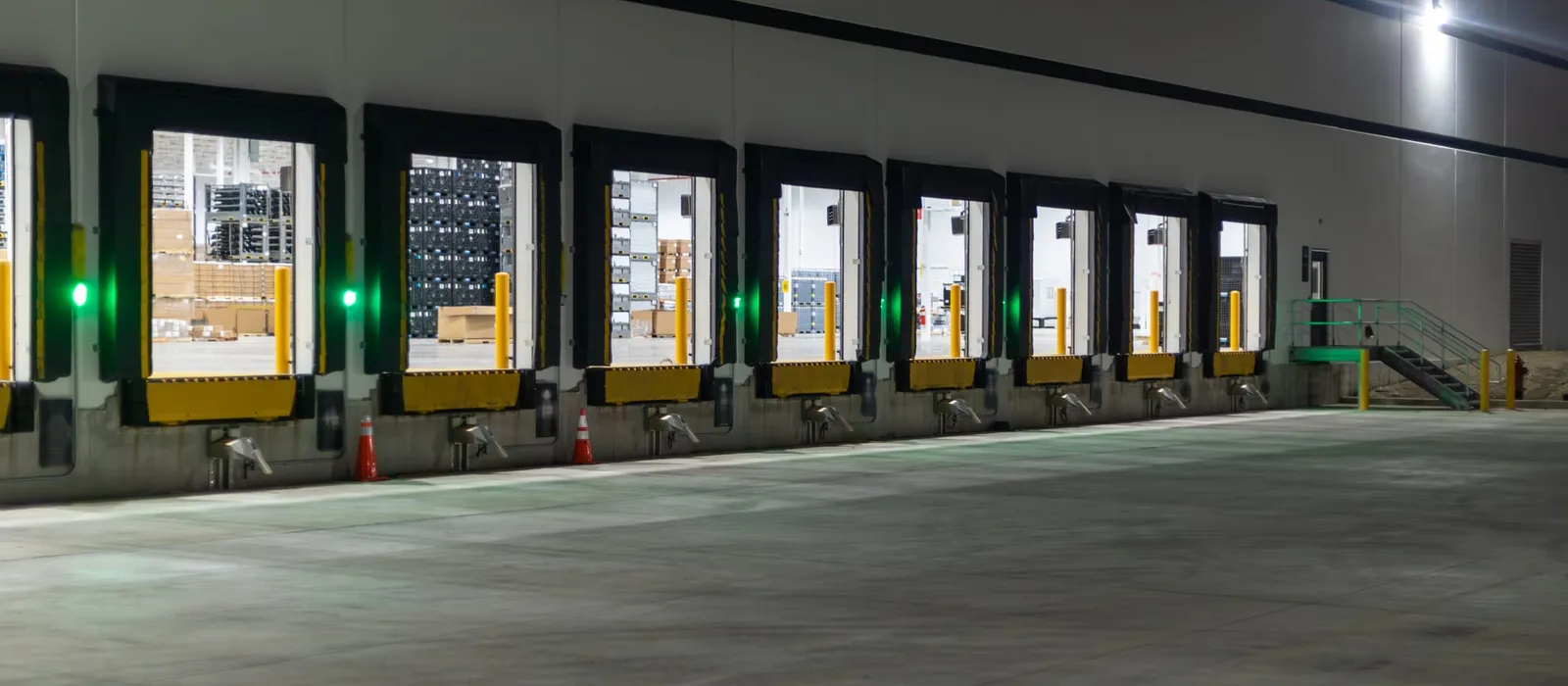
Physical spec decides who can re-use a building. The same single-tenant REIT targets clear heights of generally 28 feet for smaller buildings to 40 feet for larger ones, wide column spacing, efficient dock ratios, deep truck courts and cross docking, because those features make a building easy to lease to the next user. Ask for the same data on any trust's building.
For your exchange, the building and its site work are real property. Reg. section 1.1031(a)-3 lists warehouses and factories as buildings, and paved parking areas, other pavements and railroad tracks as inherently permanent structures. A tenant's racking and equipment are its own.
Industrial leases run about five years, so re-leasing happens on the trust's watch
Industrial leases are shorter than many exchangers expect. The largest logistics REIT reports that leases commenced in 2025 had a weighted average term of 70 months, with fixed or inflation-linked escalations. The single-tenant REIT reports a weighted-average remaining term of 4.8 years on its consolidated portfolio, and the non-traded REIT reports about 3.8 years across 269 buildings that were 90.7% occupied at year end.
Set that against a trust that may hold for several years. If the lease ends before the sponsor plans to sell, the trustee cannot re-let the space; the ruling permits new leases only on the tenant's bankruptcy or insolvency. The usual answers are a sale before expiry, a master tenant that holds the leasing power, or conversion to an LLC, explained at the DST springing LLC.
Escalations help only while the tenant stays. Distributions from an industrial trust can fall or stop if a lease is not renewed.
Tenant credit decides the downside, and a single building has no cushion
The single-tenant REIT is direct about it: because its buildings are generally net leased to single tenants, the financial failure of or default by one tenant is likely to cause a significant or complete reduction in the cash flow from that tenant's building. Across its whole portfolio the largest tenant was 6.5% of annualized base rent and 47.4% came from investment-grade tenants or guarantors.
A DST with one building has no such spread. Its one tenant is 100% of rent, so the tenant's financial statements, guarantor and remaining term matter more than the cap rate. The trade-off against holding several buildings is laid out at single-tenant vs portfolio DSTs.
New supply and re-leasing costs come out of reserves the trust cannot refill
The largest logistics REIT warns that at lease expiration tenants may not renew, space may not be re-leased, and renewal terms, including renovations and concessions, may be less favorable; competitors may also offer space below market rents. The non-traded REIT lists changes in the supply of or demand for similar properties among its core real estate risks.
Re-leasing has a cost even in good years. The single-tenant REIT reported weighted-average tenant improvements and leasing commissions of $1.22 per square foot on new and extended leases in 2025. A DST cannot accept more money under the ruling, so those costs come from reserves set at closing or from distributions. Check the reserve against the building's next expiration, and read what the client's own page says about the sector at industrial real estate.
If you are selling an industrial building yourself, the tax side of that sale is at 1031 exchange of an industrial warehouse.
Related questions
Are industrial DST leases usually long-term?
Some single-tenant trusts carry long leases, but filed REIT data show industrial leases commonly run about five years at signing. Check the remaining term against the sponsor's planned hold.
What is a last-mile industrial building?
An infill facility in or next to a major city that lets tenants deliver to consumers quickly, often same day. It competes on location rather than size.
Who pays property taxes and insurance in an industrial DST?
Under a net lease the tenant reimburses most operating costs, as the largest logistics REIT's filing describes. Confirm in the PPM which costs, including roof and structure, stay with the trust.
Can an industrial DST re-lease a vacant building?
The trustee cannot sign a new lease unless the tenant is bankrupt or insolvent. A master tenant with leasing power, a sale or an LLC conversion are the usual paths.
Does a REIT guaranty make the master lease safe?
No. The filed 10-K itself says there can be no assurance the guarantor can or will perform, and distributions can still be reduced or suspended.
Sources
Checked against these publications on September 30, 2026. Rules and figures change; confirm the current version with your CPA or attorney before you act. This page is general information, not tax or legal advice.
- Rev. Rul. 2004-86 (IRS)
- Form 10-K for 2025 of the largest listed logistics REIT: lease terms, demand drivers, re-leasing risk (sec.gov)
- Form 10-K for 2025 of a listed single-tenant industrial REIT: remaining term, tenant concentration, building spec (sec.gov)
- Form 10-K for 2025 of a non-traded industrial REIT: DST program, master lease, FMV option (sec.gov)
- 26 CFR 1.1031(a)-3, definition of real property (Cornell LII)