
The short answer
A flex industrial building exchanges as one piece of real property: the shell, loading docks, overhead doors, mezzanines and every tenant's office build-out are part of it. What makes flex different is the rent roll and the depreciation. Small-bay tenants sign short leases, so a buyer prices rollover and the cost of refitting suites, and owners who expensed office build-outs as qualified improvement property carry a recapture layer that a cash sale taxes as ordinary income and a complete exchange defers.
At a glance
| Docks and doors | Truck docks, dock overhead doors and dock lighting held to be section 1250 building property |
|---|---|
| Office build-outs | Interior improvements after the building is in service: 15-year QIP, bonus eligible |
| Recapture on build-outs | Depreciation above straight-line is ordinary income on a cash sale |
| Shallow-bay profile | EastGroup: depth up to 200 ft, 24 to 32 ft clear, 10% to 25% office finish |
| Tenant base | EastGroup: about 1,700 leases, no tenant above about 1.5% of rent |
| Rollover | EastGroup: about 13.1% of rent was scheduled to expire in 2026 |
| Bonus depreciation | 100% for qualified property acquired and placed in service after Jan 19, 2025 |
Docks, doors, mezzanines and the office finish all ride with the building
Treas. Reg. section 1.1031(a)-3 names warehouses and factories among buildings, treats walls, partitions, doors, wiring, plumbing and HVAC as structural components, and says customization does not change the answer. It also says tenant improvements that are inherently permanent are real property, so the offices, restrooms and break rooms built for each tenant are part of what you exchange.
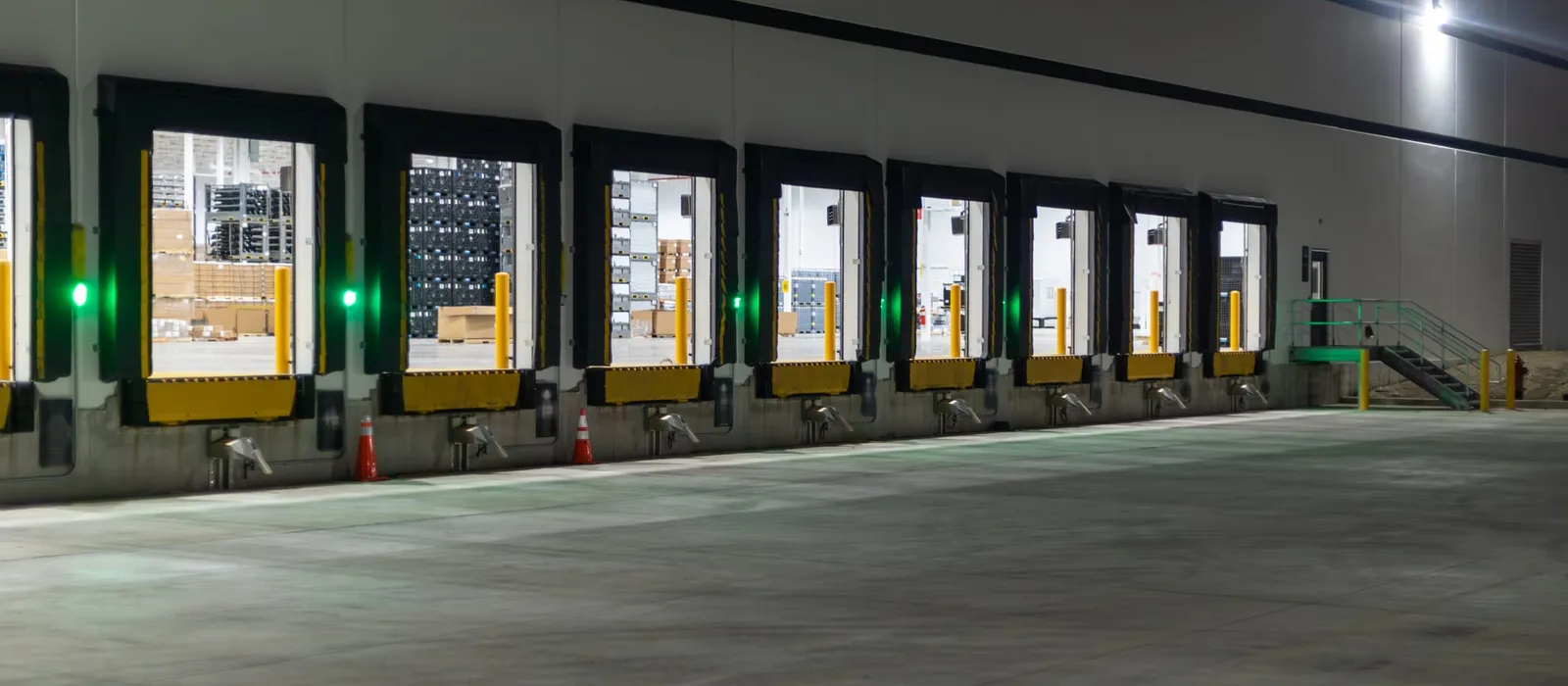
Dock features have case law behind them. The IRS Cost Segregation Audit Techniques Guide, a non-binding audit guide, summarizes Consolidated Freightways v. Commissioner, 708 F.2d 1385 (9th Cir. 1983), as treating truck loading docks, dock overhead doors and dock lighting as section 1250 building property, and lists a mezzanine system as section 1250 in another case. Forklifts, racking a tenant can unbolt and production machinery are equipment.
If you own the racking or a tenant left equipment behind, any price paid for it is outside the exchange. Most multi-tenant landlords own only the building, which keeps the sale simple.
Office build-outs expensed as qualified improvement property are the recapture layer in a flex sale
Every time a small-bay tenant turns over, the next one usually wants its office rebuilt. Publication 946 defines qualified improvement property as an improvement to the interior of nonresidential real property placed in service after the building was first placed in service, gives it a 15-year recovery period, and confirms the 100% special allowance for qualified property acquired and placed in service after January 19, 2025. The building shell stays on a 39-year schedule.
That split matters at sale. QIP is section 1250 property, and section 1250(b)(1) taxes depreciation above the straight-line amount as ordinary income. The straight-line depreciation on the shell and the build-outs is unrecaptured section 1250 gain taxed at up to 25%, and the rest is capital gain.
Hypothetical: a 40,000 square foot, 12-suite building with a $3,000,000 adjusted basis sells for $6,000,000. It includes $300,000 of office build-outs placed in service in 2025 and fully expensed, so on a cash sale nearly all of that $300,000 is ordinary income, alongside the 25% layer and capital gain on the rest of the $3,000,000 gain. A complete exchange defers all three, and section 1250(d)(4) keeps the ordinary layer deferred as long as you buy enough building, not just land. Run your own numbers with your CPA.
Buyers price small-bay rollover, the office share and how quickly a suite can be re-let
Public owners describe the format closely. EastGroup Properties' 2025 Form 10-K says 91% of its portfolio is business distribution space, typically multi-tenant buildings up to 200 feet deep with 24 to 32 feet of clear height, 10% to 25% office finish and 100- to 120-foot truck courts, aimed at users of roughly 20,000 to 100,000 square feet. It reports about 1,700 leases, no tenant above about 1.5% of rent, 96.5% occupancy at year end, and about 13.1% of rent scheduled to expire in 2026.
A building with a higher office share or lower clear height than that profile competes for a different, smaller tenant, and buyers adjust rent and downtime assumptions accordingly. Bring a lease expiration schedule, the cost of your last few suite turnovers and the tenant-improvement allowances you still owe, because a buyer will deduct unfunded allowances from the price.
At closing, tenant security deposits credited to the buyer reduce the cash that reaches your intermediary; our answer on deposits and prorations explains how to keep them out of the exchange funds.
Replacement options: larger industrial, an industrial DST, or a mix that ends the suite turnovers
Owners leaving small-bay management often trade into a single-tenant warehouse on a long net lease or into Delaware Statutory Trust interests that hold modern distribution buildings. Rev. Rul. 2004-86 is the reason a DST suits single-tenant or master-leased industrial rather than a multi-tenant flex park: its trustee cannot negotiate new leases except on a tenant's bankruptcy or insolvency. Our industrial asset class page and warehouse page cover those replacements, and DST asset class choices compares sectors. Keep the debt side in view too: if the flex building carried a loan, the replacement needs at least as much new debt or added cash.
- Another flex building: familiar operations, the same turnover and build-out cycle.
- Single-tenant warehouse: one lease to manage, one tenant's credit to rely on.
- Industrial DST: no management, no ability to re-lease if the tenant leaves.
Buying a flex industrial building as replacement property: the rollover schedule, owed allowances and suite condition before day 45
Ask for the rent roll with expirations by year, the renewal history of each tenant, and the allowances and free rent still owed under signed leases. A building with a third of its rent expiring in one year needs more equity in reserve than its occupancy suggests.
Walk every suite. Office finish that suited the last tenant is often demolished for the next one, so estimate the turnover cost per suite and check the roof, dock equipment and fire sprinkler system, which the landlord usually maintains in multi-tenant buildings.
On the buy side, depreciation follows your carried-over basis: the basis that carries from the building you sold generally continues on its old schedule, and only added basis starts fresh, with new office build-outs eligible as qualified improvement property. Identify alternatives under the three-property rule in Reg. section 1.1031(k)-1(c)(4), which lets a written revocation swap names until day 45, and see the office condo page if a smaller owner-user unit fits better.
Related questions
Is the office area in my flex building treated differently in the exchange?
No. Office finish is part of the building and exchanges with it. It differs only in depreciation, where interior build-outs added after the building was in service are 15-year qualified improvement property.
Are dock levelers and overhead doors real property?
Dock overhead doors are doors, a listed structural component, and the Ninth Circuit treated truck docks and dock doors as building property. Levelers are not named in that case summary, so judge them under the regulation's removal factors.
Can I exchange a multi-tenant flex building into one DST?
Yes. A DST interest is treated as real property under Rev. Rul. 2004-86, so the proceeds can buy one or several DST interests, alone or with a direct property.
Does recapture on expensed build-outs disappear in an exchange?
It is deferred, not erased. The ordinary-income amount carries into the replacement and can be recognized on a later taxable sale.
Do I need to replace the mortgage on the flex building?
To defer all gain, the replacement must carry at least as much debt as you paid off, or you must add cash to cover the difference.
Sources
Checked against these publications on September 30, 2026. Rules and figures change; confirm the current version with your CPA or attorney before you act. This page is general information, not tax or legal advice.
- Treas. Reg. section 1.1031(a)-3, Definition of real property
- IRS Publication 5653, Cost Segregation Audit Techniques Guide (2-2025), case summaries
- IRS Publication 946 (2025), How To Depreciate Property
- IRC section 1250, Gain from dispositions of certain depreciable realty
- EastGroup Properties, Form 10-K for 2025
- Treas. Reg. section 1.1031(k)-1, Treatment of deferred exchanges
- Rev. Rul. 2004-86