The short answer
The land, pads, streets and utility systems of a mobile home park or RV park are real property and can be exchanged under section 1031; park-owned homes count only if they are real property under state law, and the notes you carry for residents never do. What sets a park sale apart is the calendar before closing: several states give residents notice and a chance to buy first, such as 45 days in Florida, 60 days in New Hampshire, and in Massachusetts 45 days plus up to 180 more for financing and closing. Your 45-day identification clock starts only at the deed, so the notice period is when to line up the replacement, which for owners leaving operations is often a traditional DST or a net-leased building.
At a glance
| What exchanges | Land, pads, roads, utility lines and buildings, Reg. section 1.1031(a)-3 |
|---|---|
| Park-owned homes | Real property only if state law treats them so on the closing date |
| Florida | Association gets price and terms; 45 days to sign a contract, Fla. Stat. 723.071 |
| Massachusetts | 51% residents' group: 45 days to match, 90 to finance, 90 to close |
| New Hampshire | 60 days' notice before accepting an offer; good-faith talks, RSA 205-A:21 |
| Your own water system | 15 connections or 25 residents makes it a public water system, 40 CFR 141.2 |
| Site work | Roads and paving are 15-year land improvements under Publication 946 |
Decide first whether you are selling a lot-rent business or a housing operation, because buyers price them differently
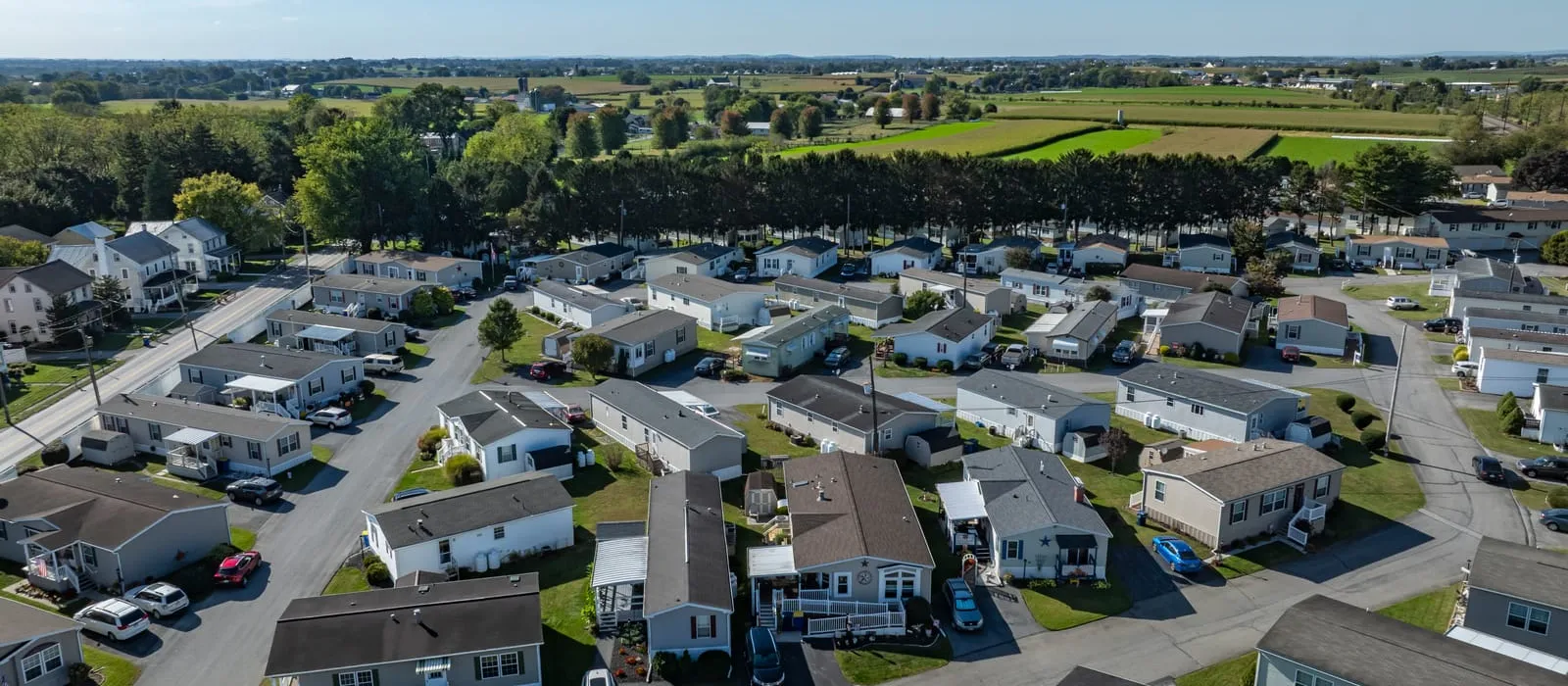
A community where residents own their homes and rent the land is valued on lot rent: occupied lots times monthly rent, less taxes, insurance, utilities you pay and upkeep, capitalized at a rate drawn from recent park sales. Almost all of that price is real property. A park where you own and rent dozens of homes is part landlord, part housing operator, and buyers tend to discount the homes and the work they bring.
Hypothetically, a 150-lot park with 135 lots occupied at $550 a month collects about $891,000 a year. If taxes, insurance, the utilities the park pays and upkeep take $500,000, the net is about $391,000, and at a 6.5 percent capitalization rate that is roughly $6,000,000. The same arithmetic explains why lot-rent history matters so much: a lasting $25 increase across those 135 lots adds about $40,500 of net income and, at that rate, about $623,000 of price, as long as the increase complies with your state's notice rules.
The buyer pool follows. Regional operators and larger owners compete for tenant-owned communities with city water and sewer. Smaller parks with private utilities or many park-owned homes draw fewer bidders. In some states the residents themselves, organized as an association or cooperative, have a statutory place in the queue, which is the subject of the next section.
How each home, note and improvement is classified for the exchange is worked through on the mobile home park property page. This page is about the sale calendar, the regulators and the replacement.
Resident notice and purchase-right laws can add months before you may accept an offer
Florida requires a park owner who offers the park for sale to notify the officers of the homeowners' association with the price, terms and conditions. Under Florida Statutes section 723.071 (2026), the homeowners, through the association, may buy the park by meeting those terms and signing a contract within 45 days of the notice being mailed, unless the parties agree otherwise. Subsection (4) lists transfers the rule does not reach, including transfers to family heirs, to an affiliate, foreclosures, and any exchange of a park for other real property. Whether that last exception reaches a deferred exchange in which a cash buyer pays a qualified intermediary is a question for Florida counsel; do not assume it does.
Massachusetts goes further. General Laws chapter 140, section 32R requires notice to residents by certified mail within 14 days after the park is first advertised or listed and at least 45 days before the sale, with copies to state officials. A group representing at least 51 percent of the home owners has a right of first refusal: 45 days to propose a comparable agreement, then 90 days to obtain financing and another 90 days to close. A sale the residents choose to match can therefore take more than seven months from your accepted offer.
New Hampshire's RSA 205-A:21 bars an owner from making a final unconditional acceptance of an offer without first giving tenants 60 days' notice of the intent to sell and the price and terms, requires good-faith negotiation with tenants during that period, and gives tenants who make an offer a reasonable extra time to find financing. Other states have their own versions or none; check the Florida, Massachusetts or New Hampshire state page and a local attorney before you sign a listing agreement.
Your 45 days start at the deed, so use the notice period to line up the replacement
Under section 1031(a)(3) the identification and exchange periods run from the day you transfer the park. A resident notice period that delays the closing does not shorten your exchange; it lengthens the time before it starts. Use it. Reserve equity, read offering documents and draft the identification letter while the association decides, so the list is ready the day the deed records.
The exchange works whoever buys. A residents' association or cooperative that matches the offer pays cash at closing like any other purchaser, and the proceeds go to your intermediary the same way. What changes is timing: a matched sale under the Massachusetts schedule can close many months after the outside offer, so do not commit to a replacement that must close before you know which buyer you have, unless you are prepared to run a reverse exchange.
Private water and sewer make your park a regulated utility, and buyers price that risk
Under 40 CFR 141.2, a system that provides piped drinking water to at least 15 service connections or regularly serves an average of at least 25 people a day for 60 days a year is a public water system, and one serving 15 year-round connections or 25 year-round residents is a community water system. Most parks with their own well cross that line, which means sampling, reporting and an operator under federal and state rules. A buyer's diligence will ask for the compliance history, and its lender will reserve for any well, treatment or lagoon work.
Those systems are real property and exchange with the land; roads, paving and similar site work are 15-year land improvements under Publication 946, which also places property integral to commercial water distribution in a 25-year class. How your water and sewer assets were classed affects the depreciation in the gain, so pull the fixed-asset list before modeling the tax. Bonus depreciation taken on site work is the issue the RV park property page works through.
Park-owned homes and the resident notes you carry are the part of the price an exchange cannot shelter
A home that is still titled like a vehicle, rather than converted to real property under state law, is personal property, and Reg. section 1.1031(a)-3 lists notes and other evidences of debt as never real property. Price both separately in the purchase agreement. The home sales are taxed in the year of closing, with depreciation recaptured; the notes can be sold to the buyer for cash or kept and collected.
If many homes are park-owned, converting the affixed ones to real property where your state allows it, or selling homes to residents before listing, moves value into the exchangeable column. Both take time, so they belong at the start of the plan.
RV parks and campgrounds follow the same exchange rules with seasonal books and a permit that stays behind
An RV park's land, pads, hookups and bathhouses exchange like a mobile home park's. The differences are commercial. Buyers want twelve consecutive months of revenue because many parks earn most of the year in one season; park models and rental units are vehicles, not real property; and a state operating permit is a license, which the real property regulation excludes, so the buyer applies for its own. Florida's campground permits, for example, are not transferable. Close after the season if you want the winter to inspect replacements, and see the RV park page linked above for the permit details.
A worked model: a 150-lot Massachusetts park sold for $6,000,000
Hypothetical, round numbers. An owner lists a 150-lot park on January 10 and mails the residents' notice by January 24. An outside buyer's $6,000,000 offer is accepted on March 1, which starts the residents' group's 45 days to propose a matching agreement. The group declines, and the sale closes May 30. Identification is due July 14 and the replacement must close by November 26.
The contract allocates $5,550,000 to land, pads, roads and utilities, $300,000 to 12 park-owned homes that are still titled as personal property, and $150,000 to resident notes. Only the $5,550,000, less the loan payoff, goes through the intermediary. The homes and notes are a separate taxable sale even though they close at the same table. Had the residents matched the offer, the closing could have slid into the autumn, and the replacement plan would have slid with it.
Have your CPA confirm the classification of the homes and the water system, and your attorney the notice dates, before the listing goes out.
Where park owners usually go next: DSTs or net-leased buildings that end the operating role
Most owners selling a park are selling a job: rent collection, septic calls, rule enforcement and regulators. Interests in Delaware Statutory Trusts end that work; the firm's page lists minimums between $100,000 and $250,000 per trust, so a park's proceeds can be spread across multifamily, industrial and net-lease trusts. Whether a manufactured housing trust is open when you close depends on what sponsors are offering then. A trust interest is illiquid, the sponsor sets the sale date, distributions can be reduced or suspended, and principal is at risk.
Owners who would rather hold a deed can look at a single net-leased building on the triple net page or a direct title security. Owners selling a portfolio of apartments alongside the park should also read selling an apartment building; those selling a storage facility on the same land, selling a self-storage facility.
Related questions
Do the residents' rights apply if I sell to a family member?
Florida's section 723.071 excludes a sale to someone who would inherit from the owner under the intestacy table, and transfers by gift. Massachusetts and New Hampshire define for themselves which transfers their notice rules reach; check them with counsel before structuring a family sale, and remember a sale to a relative also brings the section 1031(f) related-party rules into the exchange.
Can the residents' association be the buyer in my exchange?
Yes. An association or cooperative that buys the park pays the price like any buyer, and the proceeds go to your qualified intermediary. Its financing timeline is the thing to plan around.
Does the Florida exemption for exchanges let me skip the residents' notice?
Do not assume so. The exemption speaks of an exchange of a park for other real property; a sale to a cash buyer through an intermediary may not be read that way. Get a written opinion from Florida counsel before relying on it.
Is my park's well really regulated like a city water system?
If it serves at least 15 connections or about 25 people for 60 days a year, it meets the federal definition of a public water system, and with year-round residents it is a community water system. The state program usually administers the rules.
What about the house I live in on the park property?
Your own residence is not exchange property. Its share of the price is handled under the home-sale exclusion, so allocate it in the contract, as the farmhouse treatment answer explains for the same problem on a farm.
Sources
Checked against these publications on November 8, 2026. Rules and figures change; confirm the current version with your CPA or attorney before you act. This page is general information, not tax or legal advice.
- 26 U.S.C. section 1031, Exchange of real property held for productive use or investment
- Treas. Reg. section 1.1031(a)-3, Definition of real property
- Florida Statutes section 723.071 (2026), Sale of mobile home parks
- Massachusetts General Laws chapter 140, section 32R, Manufactured housing community sale or lease: notice and right of first refusal
- New Hampshire RSA 205-A:21, Notice of sale of manufactured housing park
- 40 CFR 141.2, Definitions (public water system; community water system)
- IRS Publication 946, How To Depreciate Property