The short answer
A strip center or retail building held for rent can be sold and the gain deferred with a 1031 exchange into a single-tenant net-leased building, interests in Delaware Statutory Trusts, a direct title security, or a mix, all of which reduce or end the landlord work. What makes a retail sale its own project is the paperwork the leases create: tenant purchase rights, co-tenancy and exclusive-use clauses that a buyer will read, estoppel certificates its lender will demand, and CAM and tax reconciliations that settle after closing and must stay out of the exchange account. Pads and outparcels can be sold, ground leased or exchanged on their own.
At a glance
| Building life | 39-year straight line for nonresidential real property, section 168(c) |
|---|---|
| Tenant buildouts | Qualified improvement property is 15-year, straight line, section 168(e) |
| Ground lease as replacement | A leasehold with 30 years or more to run is like kind to a fee, Reg. section 1.1031(a)-1 |
| Accessibility duty | Landlord and tenant are both public accommodations, 28 CFR 36.201 |
| Post-closing reconciliations | Settle CAM and tax true-ups outside the exchange account |
| Debt paid off | Counts as money received unless matched by new debt or added cash |
| DST minimums | The firm's traditional DST page lists $100,000 to $250,000 per trust |
Passive income is the goal, so decide how much landlord work you are willing to keep
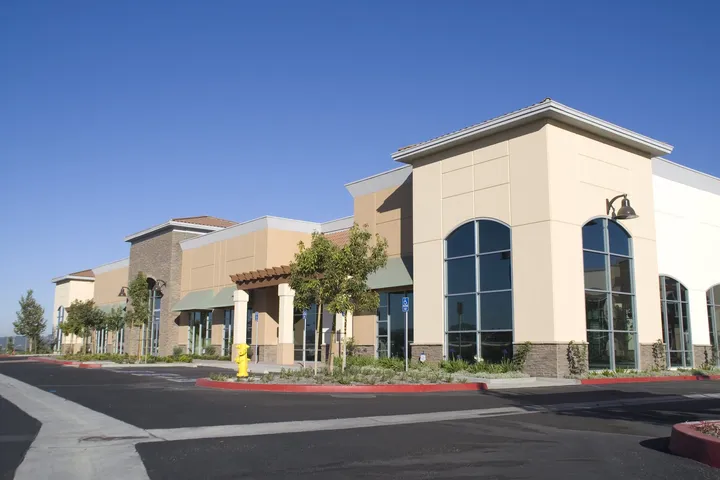
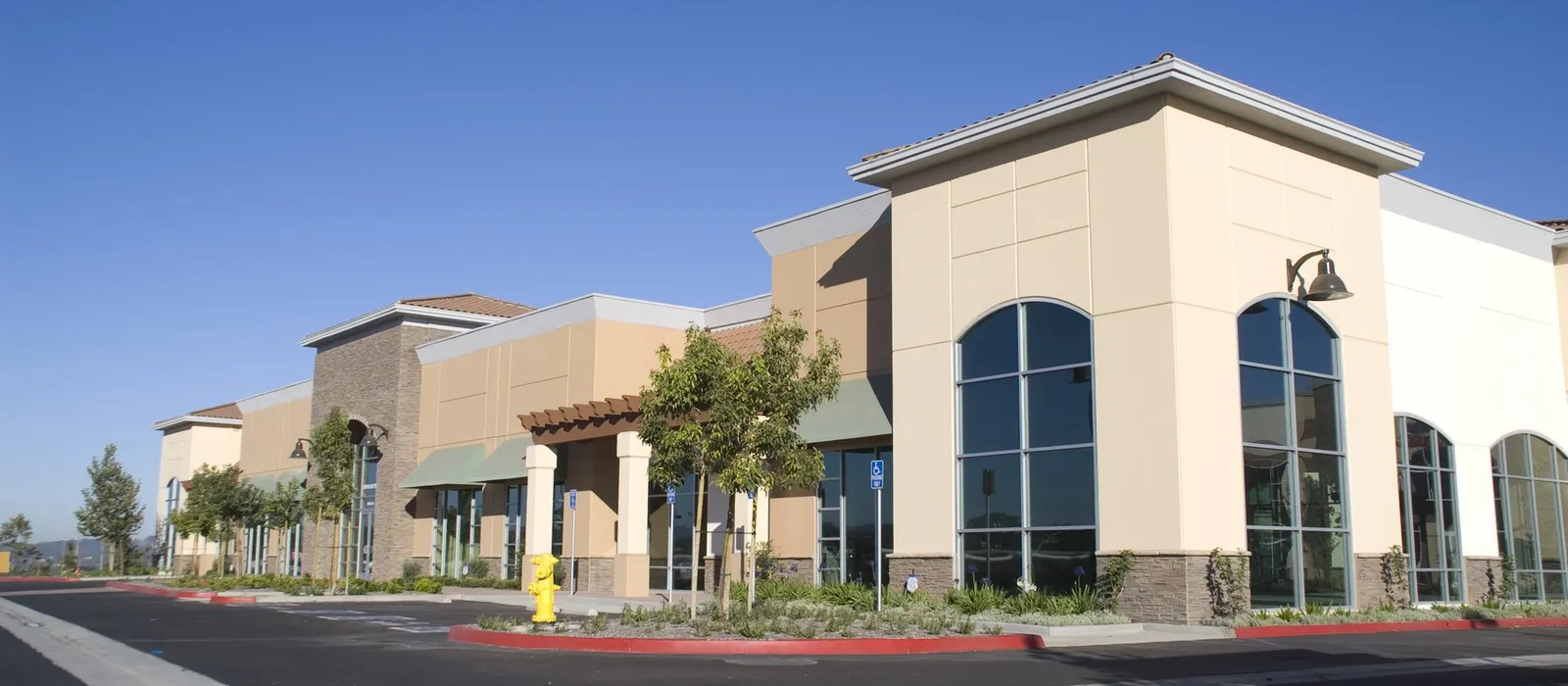
A multi-tenant center is one of the most hands-on assets a private owner can hold: five to fifteen leases with different terms, monthly CAM billing and an annual reconciliation, a roof, a parking lot, signage, and the constant job of filling the next vacancy. The owners who sell are usually not leaving real estate. They want the rent without the work.
There are three levels of passive. A single-tenant net-leased building replaces many small leases with one long lease where the tenant pays taxes, insurance and most upkeep, at the cost of depending on one tenant's credit. An interest in a traditional DST removes the management entirely and spreads rent over many tenants and buildings, at the cost of control and liquidity. A direct title security keeps a deed in your own LLC with a lease and manager in place. All three qualify under section 1031(a)(1) because all US investment real estate is like kind. The tax layers on a long-held center are set out on the strip center property page.
Read your leases before the buyer does: purchase rights, co-tenancy and exclusives travel with the sale
Some retail leases give a tenant a right of first refusal or a right of first offer on a sale of the building. A clause like that can require you to offer the tenant the same terms before you accept an outside buyer, and the waiting period it sets runs before the closing that starts your exchange. Find those clauses now, and get written waivers where the tenant has no interest, so they do not surface during the buyer's title review.
Co-tenancy clauses let smaller tenants pay less rent or leave if an anchor or a set share of the center goes dark, and exclusive-use clauses bar you from leasing to a competitor. Buyers read both as risk to income and price them in. Lenders will also want estoppel certificates, signed statements from each tenant confirming the rent, the term and that you are not in default, and often subordination agreements. Start collecting them when you list; a tenant who is slow to sign can delay a closing your replacement plan depends on.
CAM, percentage rent and tax reconciliations close after you do, so keep them out of the exchange account
Retail tenants reimburse their share of taxes, insurance and common-area costs through estimated monthly payments, reconciled after year end, and some pay percentage rent on sales. A sale in the middle of the year leaves a reconciliation that neither you nor the buyer can finish at closing. Purchase agreements usually provide for a post-closing true-up between seller and buyer.
Those amounts are operating items, not sale price. Pay any credit you owe the buyer from your own funds and receive any refund into your own account, never through the intermediary. A credit taken out of exchange proceeds at closing is treated as cash you received, the issue covered in seller credits and boot; CAM charges explains the billing that creates the reconciliation.
Pads and outparcels can be sold, ground leased or exchanged on their own
Many centers include a pad site at the street, sometimes already ground leased to a restaurant or bank and sometimes vacant. A separately described pad can be sold to a different buyer as its own relinquished property, either inside the same exchange or in a separate one with its own clocks. A ground-leased pad often sells to a different kind of buyer than the center, one who values a long ground rent from a single tenant, so pricing it separately can raise the total.
On the buy side, a ground lease is a fair replacement too. Reg. section 1.1031(a)-1(c) treats a leasehold of a fee with 30 years or more to run as like kind to real estate, and owning the land under someone else's building is real property in its own right. The ground lease strategy guide compares the two positions.
Tenant buildouts, qualified improvement property and the 39-year shell decide what your sale owes
The building shell is depreciated over 39 years under section 168(c). Interior work you paid for in a nonresidential building after it was first placed in service, other than enlargements, elevators and structural framework, is qualified improvement property under section 168(e)(6): 15-year property, recovered on the straight-line method, and eligible for bonus depreciation. Retail owners who funded second-generation buildouts for new tenants often took large first-year deductions on that work.
Those deductions lowered your basis and raised the gain that a sale will produce, and the character of the part tied to bonus depreciation is a question for your CPA. A complete exchange into real property of at least equal value defers it all; a partial exchange pulls the first dollars of recognized gain out at the higher rates. Pull the fixed-asset register before you model the sale, because it decides how much of the gain sits in each layer.
Accessibility is a shared duty that buyers check, and the lease decides who pays
Stores and restaurants are places of public accommodation under the Americans with Disabilities Act. 28 CFR 36.201(b) says both the landlord who owns the building and the tenant who operates the business are public accommodations subject to the rules, and that the lease may allocate responsibility between them. A buyer's diligence will look at parking, curb ramps, entrances and restrooms, and at what each lease says about who must fix them.
Barriers a buyer finds tend to come off the price or become a closing credit. Know your leases' allocation and any past complaints before the buyer's inspector arrives, so the negotiation is about numbers you already have.
A worked model: a five-tenant center sold for $4,500,000
Hypothetical, round numbers. A five-tenant center sells for $4,500,000 with $200,000 of costs. The owner's adjusted basis is $1,800,000 and a $1,500,000 loan is paid off at closing. The net sale price is $4,300,000, the gain is about $2,500,000, and about $2,800,000 reaches the intermediary.
Full deferral needs at least $4,300,000 of replacement property and, under Reg. section 1.1031(d)-2, at least $1,500,000 of debt or added cash. One combination: a $3,000,000 single-tenant net-leased building bought with $1,500,000 of equity and a $1,500,000 loan, plus $1,300,000 spread across two all-cash trusts. Total value is $4,300,000 and the debt matches the payoff. Your CPA should check the result against your own basis, rates and state before the identification letter is signed.
Where retail equity usually lands, and the risks that come with each choice
A single net-leased building gives you one tenant to watch, a lease term that sets your income horizon, and the decision of when to sell. Trust interests on the firm's traditional DST page, with minimums listed between $100,000 and $250,000 per trust, let one center's equity be spread across industrial, multifamily and net-lease properties in several states. Those interests cannot be sold on an exchange, the sponsor chooses the exit, distributions can drop or stop, and the capital invested can be partly or wholly lost.
Owners with a large loan to replace can carry it in a small allocation to a leveraged zero cash flow trust described on the cash out DST page. Owners selling an office building in the same year should read selling an office building for the loss-and-gain netting, and those with a storage facility on an adjacent parcel, selling a self-storage facility.
Related questions
A tenant has a right of first refusal in its lease. Can I still do an exchange?
Yes. If the tenant buys, it pays cash like any buyer and the proceeds go to your intermediary. The right only changes who buys and how long it takes, so build its waiting period into your timeline before your 45 days begin.
Who gets the CAM reconciliation refund if I sell mid-year?
Usually the purchase agreement splits the year between seller and buyer and settles the difference after year end. Whatever you receive or pay belongs to your own account, not the exchange.
Can I sell the pad to one buyer and the center to another and still exchange both?
Yes. Each is a relinquished property. Put them in one exchange if the two sales close within days of each other, or in separate exchanges if the closings are months apart, so the later sale gets its own clocks.
Is a single-tenant net-leased store really passive?
Mostly. The tenant pays taxes, insurance and most upkeep, but you still watch its credit, renew or re-let at the end of the term and handle any roof or structure the lease leaves to you. A DST removes even that, at the price of control.
My center has an apartment upstairs that I live in. Does that change the exchange?
The apartment's share is your residence and is handled under the home-sale exclusion, while the shops are exchanged. The strip center property page covers that split.
Sources
Checked against these publications on November 8, 2026. Rules and figures change; confirm the current version with your CPA or attorney before you act. This page is general information, not tax or legal advice.
- 26 U.S.C. section 1031, Exchange of real property held for productive use or investment
- Treas. Reg. section 1.1031(a)-1, Property held for productive use in trade or business or for investment
- Treas. Reg. section 1.1031(d)-2, Treatment of assumption of liabilities
- 26 U.S.C. section 168, Accelerated cost recovery system (qualified improvement property; recovery periods)
- 28 CFR 36.201, General (ADA Title III; landlord and tenant responsibilities)