
The short answer
A truck terminal or industrial outdoor storage yard exchanges like any other real property, and because most of its value is land, which is never depreciated, the tax you defer is mainly long-term capital gain rather than recapture. Paving, fencing, lighting and the cross-dock building are improvements with modest depreciation, while trucks, trailers, yard tractors and fuel equipment you own are personal property taxed outside the exchange. Trading a land-heavy yard for a building lets the basis that came from land start depreciating again, which is often the strongest argument for an industrial DST or a net-leased warehouse as the replacement.
At a glance
| Land | Never depreciable, so no recapture on the largest piece of value |
|---|---|
| Paving and fencing | Listed inherently permanent structures; 15-year land improvements for depreciation |
| Terminals | Enclosed transportation terminals are listed buildings |
| Trucks and trailers | Personal property; motor freight assets carry a 5-year recovery period |
| Land into a building | Basis from relinquished land is treated as newly placed in service |
| Building into land | Section 1250 recapture can be recognized if too little depreciable realty is acquired |
| Public IOS owner | One industrial REIT holds 46 improved-land parcels, about 147 acres, 10.1% of its rent |
Land, paving and the terminal building exchange; the fleet, the fuel island equipment and the trucking business do not
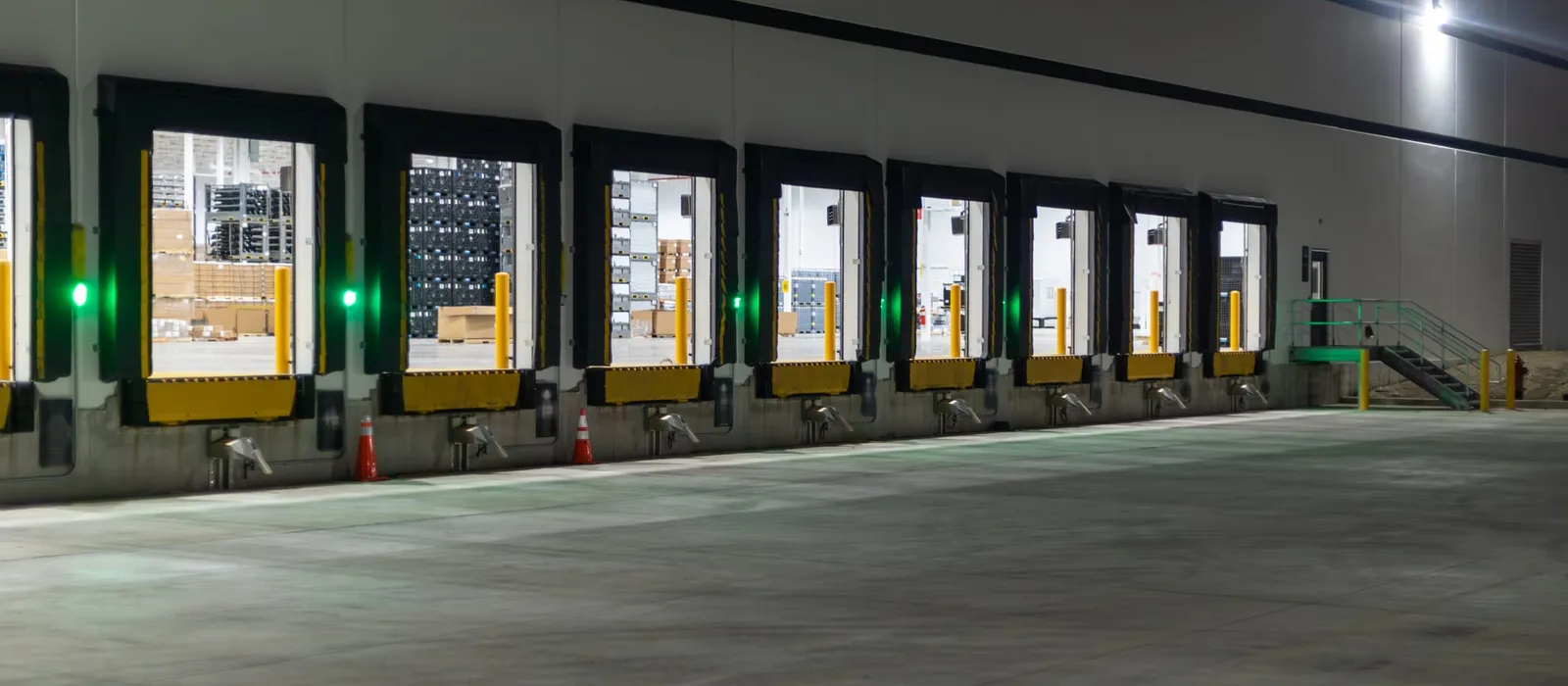
Treas. Reg. section 1.1031(a)-3 lists enclosed transportation terminals as buildings and paved parking areas, other pavements, fences, special foundations and inherently permanent outdoor lighting as inherently permanent structures. A stabilized gravel yard with a guard shack, perimeter fence and light poles is therefore real property from the ground up, and so is a cross-dock with its doors and levelers.
Tractors, trailers, yard spotters, chassis and portable fuel tanks are personal property; IRS Publication 946 places assets used in the commercial carrying of freight by road in class 42.0 with a 5-year recovery period. If you are a carrier selling the terminal and the operation together, IRC section 1060 requires a residual-method allocation and only the Class V real estate goes to the intermediary.
A trucking authority, a permit to operate the yard or a conditional-use approval held by your business is a license to operate a business and, under paragraph (a)(5)(ii) of the same regulation, not real property. Zoning that runs with the land is part of the land's value; a permit personal to your operation is not.
Because the value is land, the tax is mostly capital gain, and a building-to-land trade can trigger recapture
Publication 946 states that you cannot depreciate land, and it places sidewalks, roads, fences and drainage in asset class 00.3 with a 15-year recovery period. A yard bought decades ago therefore carries little depreciation and a large gain: the paving and the shop recapture as section 1250 property, and the rest is long-term capital gain at 15% or 20% plus the 3.8% net investment income tax for many sellers. Our page on capital gains tax on a land sale covers the rate layers.
Direction matters inside an exchange. Section 1250(d)(4)(C) lets the ordinary-income layer through when the section 1250 property you acquire is worth less than that layer, so trading a terminal with bonus-depreciated paving for raw land can create taxable recapture with no cash. Going the other way helps you: under Treas. Reg. section 1.168(i)-6(d)(2), basis attributable to relinquished land that ends up in replacement buildings is treated as placed in service in the year of the exchange and depreciated on a fresh schedule.
Hypothetical: a 10-acre yard with a $1,000,000 basis, almost all land, sells for $9,000,000. An exchange into a $9,000,000 warehouse allocated $2,000,000 to land and $7,000,000 to building defers the $8,000,000 gain, and most of the carried-over basis attributable to the old land is now building basis depreciable over 39 years instead of sitting idle. Run your own numbers with your CPA before you set the allocation.
Zoning scarcity drives the buyer pool, and environmental history drives the timeline
Terreno Realty's 2025 Form 10-K shows what institutional buyers are paying for: 46 improved-land parcels of about 147 acres used for industrial outdoor storage, including truck, trailer and car parking, made up 10.1% of its annualized base rent, and truck terminals and other transshipment facilities another 6.0%. The same filing describes targeting supply-constrained submarkets with physical or regulatory barriers to new industrial development and notes that improved land may be redeveloped in the future.
That is the pricing logic in a sentence: a yard is valued on what the zoning lets the next owner do. Developers who see a warehouse site and logistics tenants who cannot get a new outdoor storage permit both compete for the same parcel, which is why a lease to a single trucking tenant with a short remaining term can sell close to land value.
Fuel and maintenance history is the diligence item that moves closings. A tank with 10% or more of its volume below ground is an underground storage tank under 40 CFR 280.12, and buyers will order a Phase I under the ASTM E1527-21 practice recognized in 40 CFR 312.11. Order yours before listing so a recognized environmental condition does not surface on day 30 of the buyer's diligence.
Replacement paths: another yard, a net-leased warehouse or an industrial DST
Another yard keeps you in the land-value thesis but keeps the depreciation low and the tenant base thin. A net-leased warehouse or cross-dock converts land basis into depreciable building basis and puts a lease in place of a month-to-month parking arrangement; the industrial warehouse page covers how those leases are underwritten.
An industrial DST spreads the proceeds across several buildings and tenants with no management, and our industrial investment page explains how we review those offerings. Under Rev. Rul. 2004-86 the trustee cannot sign new leases or renegotiate existing ones except on a tenant bankruptcy, so the length and credit of the leases in place carry more weight than they would in a yard you manage.
If the yard carries a large mortgage, a cash-out DST structure can supply the replacement debt that the exchange equation requires; the traditional DST route suits owners with little or no debt.
Buying a truck terminal or IOS yard as replacement property: zoning, surface and the tenant before day 45
Start with the zoning letter. Confirm that outdoor storage, truck parking or terminal use is a permitted use rather than a nonconforming one that ends if the use stops, and whether the permit belongs to the land or to the current tenant. A nonconforming yard can lose the very feature you are paying for.
Then the surface and the tenant. Paving, stormwater controls and lighting are capital items the lease may or may not push to the tenant; ask for the tenant's financials, the remaining term and whether it has any right to buy. Many yard leases are short, so price the land on what it is worth with the tenant gone.
Expect little first-year depreciation. Land is not depreciable, and under Reg. section 1.168(i)-6 your carried-over basis follows the old schedule while only new money in paving or buildings starts fresh. Because most of what you buy is land, the exchange defers tax without building new deductions.
Use the three-property rule in Treas. Reg. section 1.1031(k)-1(c)(4) to name a backup such as an industrial DST, because a Phase I finding on a yard with fueling history can stall a closing.
Related questions
Is a gravel yard with no building real property for a 1031 exchange?
Yes. Land is real property, and fences, lighting and pavement are listed as inherently permanent structures in Treas. Reg. section 1.1031(a)-3, so a stabilized yard qualifies whether or not it has a building.
Can I exchange my trucks along with the terminal?
No. Since 2018 only real property is eligible, so the fleet and yard equipment are sold in a taxable sale even when the terminal goes through the exchange; the gain on them is generally section 1245 recapture.
Why does moving from a yard into a warehouse help my depreciation?
Under Treas. Reg. section 1.168(i)-6(d)(2), basis attributable to relinquished land that lands in a depreciable replacement is treated as placed in service in the year of the exchange, so you start depreciating basis that was frozen in land.
Can I exchange a terminal for raw land?
Yes, land is like-kind to a terminal, but if you depreciated the paving or building with bonus or accelerated methods, section 1250(d)(4)(C) can make part of that ordinary-income layer taxable because land is not section 1250 property.
Do any DSTs own outdoor storage yards?
Industrial DSTs usually hold buildings, and we have not verified a current offering dedicated to outdoor storage. Ask us through the form for what is open when you identify.
Sources
Checked against these publications on September 30, 2026. Rules and figures change; confirm the current version with your CPA or attorney before you act. This page is general information, not tax or legal advice.
- Treas. Reg. section 1.1031(a)-3, Definition of real property
- IRS Publication 946, How To Depreciate Property (asset classes 00.3 and 42.0)
- IRC section 1250, Gain from dispositions of certain depreciable realty
- IRC section 1060, Special allocation rules for certain asset acquisitions
- Treas. Reg. section 1.168(i)-6, Like-kind exchanges and involuntary conversions
- Treas. Reg. section 1.1031(k)-1, Deferred exchanges
- 40 CFR 280.12, Underground storage tank definitions
- 40 CFR 312.11, All appropriate inquiries reference standards
- Rev. Rul. 2004-86
- Terreno Realty Corporation, Form 10-K for 2025