
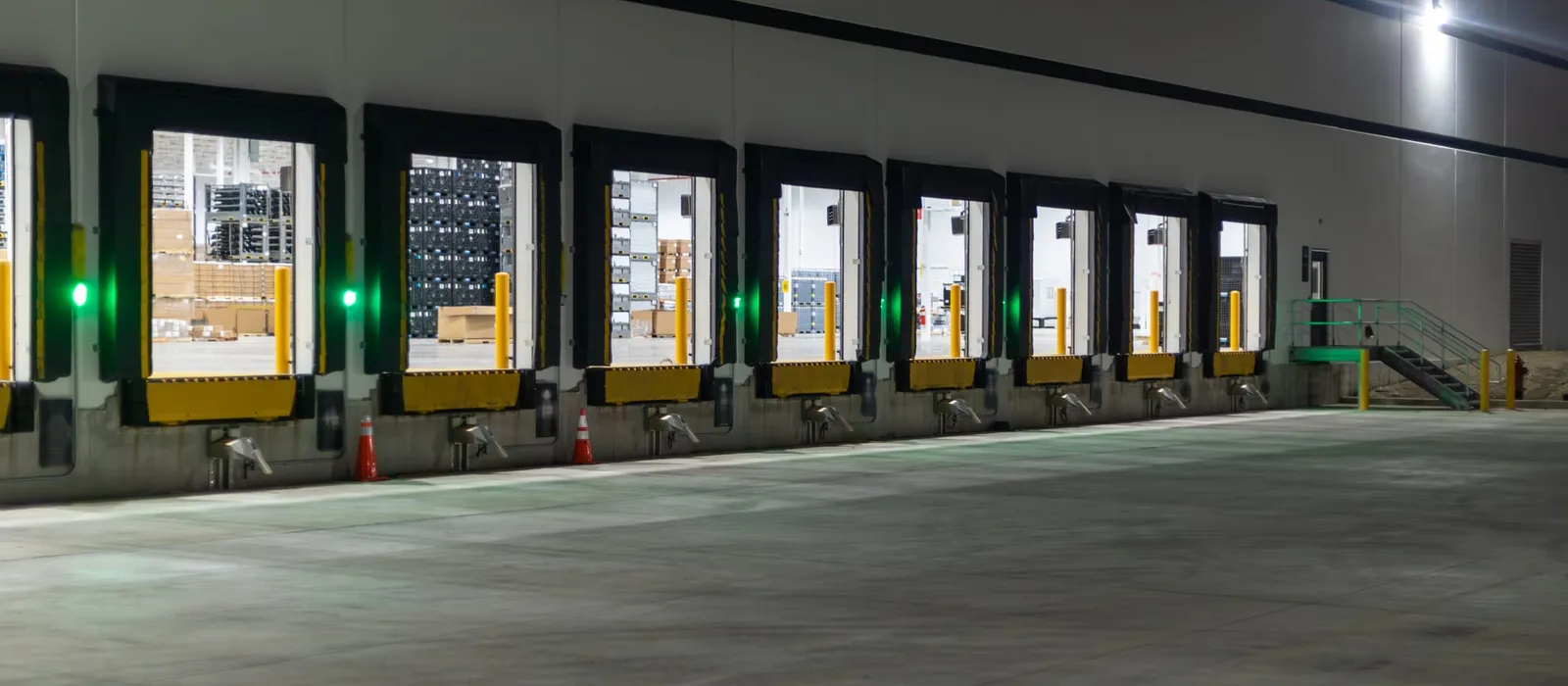
The short answer
The land, the insulated building, the docks and refrigeration systems built into the structure are generally real property for a 1031 exchange, while racking, lift trucks and any warehousing business you operate are not. The trap is depreciation: if a cost segregation study treated the refrigeration plant as section 1245 property, that recapture follows its own rules even though the plant counts as real property for the exchange, so a replacement with no comparable equipment can leave ordinary income taxable with no cash in hand. Most single-building cold storage leases to one operator or food producer, which makes tenant credit and lease term the price drivers for buyers.
At a glance
| Building | Warehouses are listed buildings in the 1031 real property regulation |
|---|---|
| Insulation and humidity control | Named structural components when integrated into the building |
| Unlisted equipment | Four-factor test: installation cost, design to move, damage on removal, installed during construction |
| Recapture character | Set by depreciation rules, not by the 1031 real property definition |
| Section 1245 in an exchange | Recapture limited to gain recognized plus value of non-1245 property received |
| Public operator scale | One filer runs 231 warehouses; its 25 largest customers are 52% of warehouse revenue |
| Refrigerant | Most large warehouses use ammonia, regulated by EPA and OSHA process safety rules |
The insulated box, the docks and built-in refrigeration are real property; racking, lift trucks and the operating business are not
Treas. Reg. section 1.1031(a)-3(a)(2) lists warehouses among the buildings that are inherently permanent structures, and it names insulation, humidity control systems, central heating and air conditioning, wiring and plumbing as structural components when they are a constituent part of the building. Insulated wall and roof panels, freezer floors with under-floor heating, dock doors and paving all fall on the real-property side.
Refrigeration machinery is not on the list, so the regulation's four factors decide it: the manner, time and expense of installing and removing it, whether it is designed to be moved, the damage removal would cause, and whether it went in during construction. An engine-room plant piped through the building during construction looks like the regulation's own example of a backup generator that was held to be a structural component; portable blast cells and pallet racking designed to be unbolted and reused look like the raised floor in the same regulation that was held not to be real property.
If you also sell a warehousing business, the transaction is an applicable asset acquisition under IRC section 1060, the written allocation binds you and the buyer, and the Form 8594 instructions put customer contracts in Class VI and goodwill in Class VII. Only the price allocated to the land and building reaches the qualified intermediary.
Refrigeration can be real property for the exchange and still be section 1245 property for recapture
The same regulation states in paragraph (a)(7) that its definition has no effect on depreciation or on sections 1245 and 1250, and that a seller of section 1245 property in an exchange remains subject to section 1245 recapture. For depreciation, Treas. Reg. section 1.48-1(e)(2) excludes from structural components machinery whose sole justification is meeting temperature or humidity requirements essential to the processing of materials or foodstuffs, which is the rule cost segregation studies rely on when they move refrigeration plants into short recovery classes.
Section 1245(b)(4) caps the recapture in an exchange at the gain recognized plus the fair market value of property received that is not section 1245 property. If you trade a cost-segregated cold storage building for an apartment complex or a DST whose assets are all section 1250 property, that cap can be large enough to tax the whole 1245 layer even though every dollar went to the intermediary. Building depreciation is different: section 1250(d)(4) limits its ordinary-income layer to gain recognized, unless the section 1250 property you acquire is worth less than that layer.
Hypothetical: a warehouse bought for $12,000,000 with $2,000,000 of land, $7,000,000 of building and $3,000,000 of refrigeration expensed with bonus depreciation sells for $18,000,000, with $1,500,000 allocated to the refrigeration. That $1,500,000 is section 1245 gain. Exchange into property that includes at least that much section 1245 equipment and the layer can be deferred; exchange into buildings only and it is likely ordinary income this year. Run your own numbers with your CPA before you choose the replacement.
Buyers price one tenant's credit, its contract and the cost of keeping the building cold
The deepest buyers are the operators themselves. Americold's 2025 Form 10-K reports 231 temperature-controlled warehouses with about 1.4 billion cubic feet, says it owns over 75% of them, and shows its 25 largest customers at 52% of warehouse revenue. Lineage's 2025 Form 10-K reports 501 warehouses with 3.1 billion cubic feet and names buying triple-net-leased facilities and sale-leasebacks with customers and other cold storage operators as part of its strategy; in 2025 it bought four warehouses from a food producer for $256 million.
Those portfolios spread customer risk across hundreds of sites. Your building does not: one tenant is 100% of the rent. Lineage notes that long-term contracts with its largest customers often carry minimum storage guarantees, so a buyer of a single building will read your lease for the same thing, plus the guarantor, the remaining term and who pays for the compressors, condensers and roof.
Ammonia is the other diligence line. Americold's filing says most of its warehouses use ammonia, which the EPA classifies as a hazardous chemical and OSHA regulates under its process safety management standard. Expect a Phase I under the ASTM E1527-21 practice that 40 CFR 312.11 recognizes, plus the refrigeration system's compliance records, before a lender will fund.
Replacement options: another cold storage asset, an industrial DST, or a fund for the taxable layers
Staying in cold storage keeps section 1245 equipment on both sides of the trade, which is the cleanest way to defer the refrigeration recapture, but it also keeps single-tenant concentration in a building that costs real money to convert to dry storage. Our industrial warehouse page covers the dry side of the same sector.
An industrial DST spreads the equity across several buildings and tenants under a traditional DST structure, and Rev. Rul. 2004-86 explains why the trustee cannot re-lease a building that goes dark except on a tenant bankruptcy. Ask the sponsor how much section 1245 property the trust holds before you rely on it for the recapture layer.
Where some section 1245 gain will be recognized anyway, an accelerated depreciation fund that places qualifying property in service after January 19, 2025 may produce first-year deductions under the restored 100% allowance described in IRS Publication 946; whether they offset your recapture depends on the passive activity rules, which your CPA applies.
- Cold storage net lease: keeps 1245 property in the chain, one tenant, conversion cost if it leaves.
- Industrial DST: diversified tenants, no management, limited ability to re-lease.
- Fund leg: addresses recognized recapture, separate deadlines and passive-loss limits.
Buying a cold storage building as replacement property: the lease, the plant and the power before day 45
Start with the lease. Confirm the tenant or its parent guarantees it, the term left, whether it has minimum storage or volume commitments behind it, and whether it sits in a master lease with other sites. Then confirm who owns the refrigeration plant: if the tenant installed and owns it, you are buying a box and the 1245 layer you need to replace is not there.
Underwrite the plant itself. Ask for the refrigerant type and charge, the age of compressors and evaporators, the process safety management file for ammonia systems, and the last floor-heating inspection, since a heaved freezer slab is a structural repair. Power is the operating cost that decides whether the tenant renews.
Depreciation on the buy side follows Treas. Reg. section 1.168(i)-6: carried-over basis generally keeps the old schedule and only new money starts fresh, so a cost segregation study on the replacement mainly helps on the excess basis. The three-property rule in Treas. Reg. section 1.1031(k)-1(c)(4) lets you name a backup, such as an industrial DST, in case the inspection or the lender stalls.
Related questions
Is the refrigeration system part of the real property I can exchange?
Usually yes if it is integrated into the building and was installed during construction, under the four factors in Treas. Reg. section 1.1031(a)-3. Portable or modular units designed to be removed are personal property and are taxed outside the exchange.
Why would I owe recapture if I reinvest everything?
Section 1245 recapture in an exchange is limited to gain recognized plus the value of non-1245 property you receive. If your replacement has no section 1245 equipment, the value of the buildings you receive can let that recapture through even with no cash boot; our section 1245 recapture page walks through the arithmetic.
My tenant owns the racking and the refrigeration. Does that change anything?
Yes. You are then selling only land, building and structural components, so no equipment allocation is needed and the 1245 issue is limited to whatever you depreciated yourself. Check the lease's fixture and surrender clauses to confirm who owns what.
Do DSTs own cold storage?
Industrial DST portfolios can include temperature-controlled buildings, but we have not verified a current offering dedicated to cold storage. Ask us through the form for what is open when you identify.
Does an ammonia system affect the exchange itself?
Not the tax rules, but it affects the timeline. Lenders and buyers want the environmental and process safety records before closing, and a delayed closing on either side squeezes the 45-day and 180-day periods.
Sources
Checked against these publications on September 30, 2026. Rules and figures change; confirm the current version with your CPA or attorney before you act. This page is general information, not tax or legal advice.
- Treas. Reg. section 1.1031(a)-3, Definition of real property
- Treas. Reg. section 1.48-1, Definition of section 38 property (structural components)
- IRC section 1245, Gain from dispositions of certain depreciable property
- IRC section 1250, Gain from dispositions of certain depreciable realty
- IRC section 1060, Special allocation rules for certain asset acquisitions
- IRS, Instructions for Form 8594
- IRS Publication 946, How To Depreciate Property
- Treas. Reg. section 1.168(i)-6, Like-kind exchanges and involuntary conversions
- Treas. Reg. section 1.1031(k)-1, Deferred exchanges
- Rev. Rul. 2004-86
- 40 CFR 312.11, All appropriate inquiries reference standards
- Americold Realty Trust, Form 10-K for 2025
- Lineage, Inc., Form 10-K for 2025